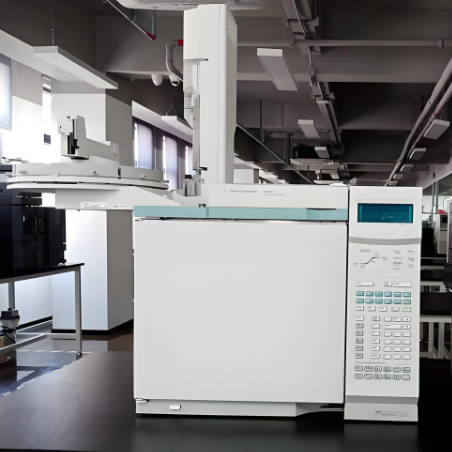
垫带硫化机检测
GB/T 2942-2009硫化橡胶与纤维帘线静态粘合强度的测定.H抽出法
本标准规定了轮胎用织物帘线与硫化橡胶静态粘合强度的测定方法。本标准适用于天然纤维或人造纤维制成的帘线。 用本方法所测定的粘合强度在很大程度上受帘线历史状况和胶料制备过程的影响,但是本方法所提供的数据可作为判断材料使用质量的依据。 本标准也适用于其他硫化橡胶制品中使用的线密度不超过800 mg/m以(tex)的类似帘线。
GB/T 8845-2017模具 术语
本标准界定了模具的常用术语。由通用术语和冲模、塑料模、压铸模、锻模、粉末冶金模、拉制模、挤压模、辊压模、玻璃模、橡胶模、陶瓷模、铸造模等术语组成。本标准适用于模具常用术语的理解和使用。
GB/T 14795-2008天然橡胶.术语
本标准规定了天然橡胶的术语。本标准适用于天然橡胶工业所使用的术语。除非另有说明,所有术语均为名词。
GB/T 21464-2008橡胶.乙烯-丙烯-二烯烃(EPDM)三元共聚物中5-乙叉降冰片烯(ENB)或双环戊二烯(DCPD)含量的测定
警告:使用本标准的人员应有正规实验室工作的实践经验。本标准并未指出所有可能的安全问题。使用者有责任采取适当的安全和健康措施,并保证符合有关法规规定的条件。本标准规定了乙烯-丙烯-二烯烃(EPDM)三元共聚物中5-乙叉降冰片烯(ENB)或双环戊二烯(DCPD)含量的测定方法。本标准适用于二烯烃含量(质量分数)在0.1%~10%范围内的乙烯-丙烯-二烯烃(EPDM)三元共聚物。
GB 25432-2010平板硫化机安全要求
本标准规定了对平板硫化机和辅助装置,特别是和装模、卸模装置之间相互作用引起的附加危险的基本安全要求。对辅助装置本身的安全要求,未予规定。本标准适用于具有垂直锁模运动、行程超过6mm的模压成型橡塑制品、胶带、胶板的平板硫化机。本标准第4章所列平板硫化机的重大危险均涵盖了模压硫化机和胶带硫化机/胶板硫化机。本标准不涵盖下列机器:注射成型机;充气轮胎硫化机;内胎、各类胶囊硫化机;热成型机;反应注射成型机。本标准不包括:具有潜在爆炸环境下使用的设备及防护系统的要求;排气通风系统的设计要求。
GB/T 31301.4-2015制鞋机械 安全要求 第4部分:鞋类成型机
GB/T 31301的本部分规定了鞋类成型机的结构、运输、安装、调试、设定、示教或过程转换、操作、清洗、维护、报废、拆解的相关安全要求。本部分包含操作者对机器的预期使用、及可预见的误用所产生的与鞋类成型机相关的全部重大危险、危险状态和危险事件(参见附录A)。本部分适用于制鞋工业内用于生产鞋及鞋配件的鞋类成型机器,包括:--连帮鞋成型机(见图1、图2和图3);--单底和鞋配件成型机(见图4~图10);--整鞋及靴成型机(见图11)。本部分也适用于上述机器用于生产鞋及其配件之外的其他产品,且生产这些产品不需要对机器进行模具之外的其他改动。本部分也适用于以下附加设备:喷雾装置、注射装置、浇注装置、喷嘴清洗器、拉料杆、模具清洗装置、活化装置、准备阶段和后处理机器人和设备(见图N.1)。本部分不适用于以下机器,除非其用于连帮鞋成型或反应成型:--使用固定注射装置和固定模具位置(夹紧装置)的成型机;--使用固定测量和混料装置及直线结构(模架)活动工作站的成型机。
GB/T 33159-2016钢帘线试验方法
本标准规定了子午线轮胎用钢帘线各项性能试验方法的试验原理、试验设备、试样制备、试验步骤、试验报告等。本标准适用于子午线轮胎用钢帘线(以下简称“钢帘线”)的试验,包括外观质量、尺寸性能、工艺性能、力学性能、镀层化学性能和粘合性能试验。
GB/T 36587-2018橡胶塑料机械 术语
本标准界定了橡胶塑料通用机械、橡胶专用机械、塑料专用机械及橡胶塑料机械安全的术语和定义。本标准适用于橡胶塑料机械行业的教学、科研、设计、制造、编写相关技术文件和书刊及技术交流。
GB/T 50643-2018橡胶工厂职业安全卫生设计标准
本标准适用于橡胶工厂新建、改建和扩建工程项目的职业安全卫生设计。
HG/T 3233-2009垫带硫化机
本标准规定了垫带硫化机的基本参数、技术要求、安全要求、试验方法、检验规则等。本标准适用于硫化垫带的液压式硫化机。
HG/T 4179-2011预硫化翻新轮胎硫化罐
本标准规定了预硫化翻新轮胎硫化罐的术语和定义、型号及基本参数、要求、试验、检验规则和标志、包装、运输及贮存等。本标准适用于以电加热或以蒸汽、导热油为传热介质的预硫化翻新轮胎硫化罐(以下简称硫化罐)。
QB/T 3638-1999皮制球工业术语
本标准规定了皮制球设计、工艺操作、质量缺陷等术语。\t本标准适用于以牛、猪、羊等天然皮革、合成革通过手工缝制或胶粘工艺制成的篮、排、足、手球,不适用于橡胶球和塑料球。
DL/T 5722-2015水电水利工程施工机械安全操作规程.塔带机
本规程适用于塔带机的安装及拆除、运行与维护保养。
NF G83-102-2008制鞋机械.靴模机械.安全要求
La présente Norme européenne s'applique aux machines de moulage pour chaussures utilisées dans l'industrie de la chaussure pour la production de chaussures et d'articles chaussants.Ces machines sont :- les machines de moulage direct des semelles ;- les machines de moulage d'éléments de chaussures et de semelles (voir Figures 4 à 10) ;- les machines pour moulage complet de chaussures et bottes.La présente Norme européenne s'applique également aux machines mentionnées lorsqu'elles sont utilisées pour des produits autres que les chaussures et articles chaussants, dans la mesure où ces produits ne nécessitent pas d'autre modification qu'un moule différent.La présente Norme européenne spécifie les prescriptions de sécurité relatives à la construction, au transport, à l'installation, à la mise au point, au réglage, à l'apprentissage ou au changement de procédé de fabrication, au fonctionnement, au nettoyage, à la maintenance, à la mise hors service, au démontage et, pour autant que cela concerne la sécurité, à la mise au rebut des machines mentionnées en 1.1.Elle traite de tous les phénomènes dangereux significatifs, situations et événements dangereux applicables aux machines de moulage pour chaussures, lorsqu'elles sont utilisées selon l'usage prévu et dans des conditions de mauvais usage raisonnablement prévisibles par le fabricant.
DIN EN 289-2014塑料和橡胶机械. 压缩成型机和压铸机. 安全要求; 德文版本EN 289-2014
This document specifies the essential safety requirements for hydraulic presses, including toggle and hydro-mechanic ones, with a vertical closing movement more than 6 mm for the moulding of plastics and/or rubber. This document covers both compression moulding and transfer moulding.
DIN EN 1845-2008制鞋机械.鞋模机械.安全要求
1.1 This European Standard applies to footwear moulding machines which are intended for use in the shoeindustry for the production of footwear and footwear components.These machines are:-- direct-on sole moulding machines (see Figures 1, 2 and 3);-- unit sole and footwear component moulding machines (see Figures 4 to 10);-- full shoe and boot moulding machines (see Figure 11).This European Standard applies also to the mentioned machines when used for other products than footwearand footwear components, as far as these products require no other changes than a different mould.1.2 This European Standard specifies safety requirements for construction, transport, installation,adjustment, setting, teaching or process change-over, operation, cleaning, maintenance, decommissioning,dismantling and, as far as safety is concerned, disposal for machines mentioned in 1.1.It deals with all significant hazards, hazardous situations and events relevant to footwear moulding machines,when they are used as intended and under conditions of misuse which are reasonably foreseeable by themanufacturer (see Clause 4).1.3 The following machines are excluded from the scope of this European Standard unless used for direct-on sole moulding or reaction moulding:-- moulding machines with static injection units and static mould stations (clamping units);-- moulding machines with static metering and mixing units and mobile stations with linear configuration (mould carriers).1.4 The European Standard does not deal with hazards created by the mixing and metering unit.NOTE For metering and mixing units, see EN 1612-1.The use of machines within the scope of this European Standard in industries other than those specified in 1.1may give rise to hazards not considered during its preparation.NOTE For this application see also EN 201 and prEN 1612-2.1.5 This European Standard also applies to the following additional equipment for material handling andoperation which are an integral part of the machine:-- spraying devices, injection units, casting units, nozzle cleaners, sprue pullers, mould front edge cleaners, activating devices, robots and equipment for preparatory and subsequent treatment (see Figure M.1).1.6 This European Standard assumes the machines:-- are operated by adequately trained persons;-- are used with adequate workplace lighting (see EN 12464-1).1.7 This document is not applicable to footwear moulding machines which are manufactured before thedate of publication of this European Standard by CEN.