电绝缘油检测
GB/T 4756-2015石油液体手工取样法
本标准规定了从固定罐、铁路罐车、汽车罐车、船舶、桶、听、泵送液体管线或加油机油枪采集液体或半液体烃类、油罐残留物和沉积物样品的手工取样法。本标准适用于在常压或接近常压的油罐中储存的或管线输送的,在常温到200 ℃范围内以液体形式储运的石油产品、原油及中间产品的取样。本标准不适用于属于其他标准研究对象的特殊石油产品的取样,例如电绝缘油(IEC 60475)、液化石油气(SH/T 0233)、液化天然气(GB/T 20603)以及气态天然气(GB/T 13609) 。本标准包括了现有的取样方法和正在使用的设备类型。对于后续出现的新设备,只要能按本标准的要求和方法进行取样,则也可用于本标准。
DL/T 1360-2014大豆植物变压器油质量标准
本标准规定了新的天然酯类(能完全生物降解)大豆植物变压器油的质量标准和检验方法。本标准适用于电气设备用新的天然酯类大豆植物变压器油的质量监督。运行中大豆植物变压器油可参考使用。
ASTM A901-2003半成品型非晶形磁芯合金的标准规范
1.1 This specification covers the general requirements to which flat-cast, amorphous, semi-processed, iron-base magnetic core alloys must conform.1.2 These alloys are produced by a rapid-quenching, direct-casting process, resulting in metals with noncrystalline structure. The metallic alloys are made to meet specified maximum core-loss values and are intended primarily for commercial power frequency (50- and 60-Hz) applications in magnetic devices. Desirable core-loss and permeability characteristics are developed by further heat treatment in a magnetic field by the purchaser. The heat treatment typically consists of heating the material to a temperature of 320 to 420176;C in a dry, inert atmosphere for 5 to 10 min, although soak times of up to 2 h may be used for large transformer cores. A magnetic field may be required during annealing as designated by the producer. Exact optimum annealing conditions depend on the processing of the material and the size and shape of the device.1.3 Some of these alloys are sensitive to mechanical stress. Care must be exercised in minimizing any stresses on the material in its final application, otherwise, its magnetic properties will be impaired significantly.1.4 This specification is developed to aid in the purchase of transformer grade amorphous strip. It provides the chemical, physical, and magnetic parameters and procedures for quality control tests. 1.5 The values stated in customary (cgs-emu and inch-pound) units are to be regarded as standard. The values given in parentheses are mathematical conversions to SI units which are provided for information only and are not considered standard.Note 18212;For more information on procedures associated with this specification, refer to the following: Practices A 34/A 34M, A 664, A 700, and B 490; Test Methods A 370 and A 773.1.6 This standard does not purport to address the safety concerns associated with its use. It is the responsibility of the user of this standard to establish appropriate safety and health practices and determine the applicability of regulatory limitations prior to use.
ASTM A901-2003(2008)半成品型非晶形磁芯合金标准规范
1.1 This specification covers the general requirements to which flat-cast, amorphous, semi-processed, iron-base magnetic core alloys must conform. 1.2 These alloys are produced by a rapid-quenching, direct-casting process, resulting in metals with noncrystalline structure. The metallic alloys are made to meet specified maximum core-loss values and are intended primarily for commercial power frequency (50- and 60-Hz) applications in magnetic devices. Desirable core-loss and permeability characteristics are developed by further heat treatment in a magnetic field by the purchaser. The heat treatment typically consists of heating the material to a temperature of 320 to 420x00B0;C in a dry, inert atmosphere for 5 to 10 min, although soak times of up to 2 h may be used for large transformer cores. A magnetic field may be required during annealing as designated by the producer. Exact optimum annealing conditions depend on the processing of the material and the size and shape of the device. 1.3 Some of these alloys are sensitive to mechanical stress. Care must be exercised in minimizing any stresses on the material in its final application, otherwise, its magnetic properties will be impaired significantly. 1.4 This specification is developed to aid in the purchase of transformer grade amorphous strip. It provides the chemical, physical, and magnetic parameters and procedures for quality control tests. 1.5 The values stated in customary (cgs-emu and inch-pound) units are to be regarded as standard. The values given in parentheses are mathematical conversions to SI units which are provided for information only and are not considered standard. Note 18212;For more information on procedures associated with this specification, refer to the following: Practices A 34/A 34M, A 664, A 700, and B 490; Test Methods A 370 and A 773/A 773M. 1.6 This standard does not purport to address the safety concerns associated with its use. It is the responsibility of the user of this standard to establish appropriate safety and health practices and determine the applicability of regulatory limitations prior to use.
ASTM D117-1996产自石油的电绝缘油的试验方法、规范和导则,取样的标准导则
1.1 This standard describes methods of testing and specifications for electrical insulating oils of petroleum origin intended for use in electrical cables, capacitors, transformers, oil circuit breakers, and other electrical apparatus where the oils are used as insulating or heat transfer media, or both. 1.2 The purpose of this standard is to outline the applicability of the available test methods. Where more than one is available for measuring a given property, their relative advantages are described, along with an indication of laboratory convenience, precision, (95% confidence limits), and applicability to specific types of electrical insulating oils. 1.3 The guide is classified into the following categories: Sampling, Physical Tests, Electrical Tests, Chemical Tests, Specifications, and Guide. Within each test category, the test methods are listed alphabetically by property measured. 1.4 This standard does not purport to address all of the safety problems, if any, associated with its use. It is the responsibility of the user of this standard to establish appropriate safety and health practices and determine the applicability of regulatory limitations prior to use.>
ASTM D117-2002产自石油的电绝缘油的抽样、试验方法和规范的的标准导则
1.1 This guide describes methods of testing and specifications for electrical insulating oils of petroleum origin intended for use in electrical cables, transformers, oil circuit breakers, and other electrical apparatus where the oils are used as insulating, or heat transfer media, or both.1.2 The purpose of this guide is to outline the applicability of the available test methods. Where more than one is available for measuring a given property, their relative advantages are described, along with an indication of laboratory convenience, precision, (95 % confidence limits), and applicability to specific types of electrical insulating oils.1.3 This guide is classified into the following categories: Sampling Practices, Physical Tests, Electrical Tests, Chemical Tests, and Specifications. Within each test category, the test methods are listed alphabetically by property measured. A list of standards follows:CategorySectionASTM MethodSampling: 3D 923, D2759, D3305, D3613Physical Tests: Aniline Point4D 611Coefficient of Thermal Expansion5D 1903Color6D 1500Examination: Visual Infrared7D 1524, D2144Flash and Fire Point8D 92Interfacial Tension9D 971, D2285Pour Point of PetroleumProducts10D 97Refractive Index11D 1218, D1807Relative Density (SpecificGravity)12D 287, D 1217, D1298, D1481Specific Heat13D 2766Thermal Conductivity14D 2717Turbidity15D 6181Viscosity16D 88, D445, D2161Electrical Tests:Dielectric Breakdown Voltage17D 877, D1816, D3300Dissipation Factor and Rela-tive Permittivity (Dielectric Constant)18D 924Gassing Tendency19D 2300Resistivity20D 1169Stability Under Electrical Discharge21D 6180Chemical Tests:Acidity, Approximate22D 1534Carbon-Type Composition23D 2140Compatibility with Construction Material24D 3455Copper Content25D 3635Furanic Compounds26D 5837Gas Analysis27D 3612Gas Content28D 831, D1827, D2945Inorganic Chlorides and Sulfates29D 878Neutralization (Acid andBase) Numbers30D 664, D974Oxidation Inhibitor Content31D 2668, D4768Oxidation Stability32D 1934, D2112, D2440Polychlorinated BiphenylContent33D 4059Sediment and Soluble Sludge34D 1698Sulfur, Corrosive35D 1275Water Content36D 1533Specification:Mineral Insulating Oil forElectrical Apparatus37D 3487High Firepoint Electrical Insulating Oils38D 52221.4 This standard does not purport to address all of the safety concerns, if any, associated with its use. It is the responsibility of the user of this standard to establ
ASTM D117-2010产自石油的电绝缘油的取样,试验方法和规范的标准指南
1.1 This guide describes methods of testing and specifications for electrical insulating oils of petroleum origin intended for use in electrical cables, transformers, oil circuit breakers, and other electrical apparatus where the oils are used as insulating, or heat transfer media, or both. 1.2 The purpose of this guide is to outline the applicability of the available test methods. Where more than one is available for measuring a given property, their relative advantages are described, along with an indication of laboratory convenience, precision, (95 % confidence limits), and applicability to specific types of electrical insulating oils.
ASTM D1275-1996a电绝缘油中腐蚀性硫的标准试验方法
1.1 This test method covers the detection of corrosive sulfur compounds in electrical insulating oils of petroleum origin. 1.2 Mineral insulating oils may contain substances that cause corrosion under certain conditions of use. This test method is designed to detect the presence of free sulfur and corrosive sulfur compounds by subjecting copper to contact with oil under prescribed conditions. 1.3 The values stated in inch-pound units are to be regarded as the standard. 1.4 This standard does not purport to address the safety concerns, if any, associated with its use. It is the responsibility of the user of this standard to establish appropriate safety and health practices and determine the applicability of regulatory limitations prior to use.
ASTM D1275-2003电绝缘油中腐蚀性硫的标准试验方法
1.1 This test method covers the detection of corrosive sulfur compounds in electrical insulating oils of petroleum origin. 1.2 Mineral insulating oils may contain substances that cause corrosion under certain conditions of use. This test method is designed to detect the presence of free sulfur and corrosive sulfur compounds by subjecting copper to contact with oil under prescribed conditions. 1.3 The values stated in inch-pound units are to be regarded as the standard. 1.4 This standard does not purport to address the safety concerns, if any, associated with its use. It is the responsibility of the user of this standard to establish appropriate safety and health practices and determine the applicability of regulatory limitations prior to use.
ASTM D1524-1994(1999)用于目视检查石油来源的电绝缘油的标准试验方法
1.1 This test method for visual examination is applicable to mineral oils of petroleum origin that have been used in transformers, oil circuit breakers, or other electrical apparatus as insulating or cooling media, or both. 1.2 This standard does not purport to address all of the safety concerns, if any, associated with its use. It is the responsibility of the user of this standard to establish appropriate safety and health practices and determine the applicability of regulatory limitations prior to use.
ASTM D1524-1994(2004)用过的石油制电绝缘油的现场目测检查的标准试验方法
By use of this test method the color and condition of a test specimen of oil may be estimated during a field inspection, thus assisting in the decision as to whether or not the sample should be sent to a central laboratory for full evaluation. Cloudiness, particles of insulation, products of metal corrosion, or other undesirable suspended materials, as well as any unusual change in color may be detected. For precise determination of color in the laboratory, Test Method D 1500 should be used.1.1 This test method for visual examination is applicable to mineral oils of petroleum origin that have been used in transformers, oil circuit breakers, or other electrical apparatus as insulating or cooling media, or both.1.2 This standard does not purport to address all of the safety concerns, if any, associated with its use. It is the responsibility of the user of this standard to establish appropriate safety and health practices and determine the applicability of regulatory limitations prior to use.
ASTM D1524-1994(2010)用过的石油制电绝缘油的现场目测检查的标准试验方法
By use of this test method the color and condition of a test specimen of oil may be estimated during a field inspection, thus assisting in the decision as to whether or not the sample should be sent to a central laboratory for full evaluation. Cloudiness, particles of insulation, products of metal corrosion, or other undesirable suspended materials, as well as any unusual change in color may be detected. For precise determination of color in the laboratory, Test Method should be used.1.1 This test method for visual examination is applicable to mineral oils of petroleum origin that have been used in transformers, oil circuit breakers, or other electrical apparatus as insulating or cooling media, or both. 1.2 The values stated in inch-pound units are to be regarded as standard. The values given in parentheses are mathematical conversions to SI units that are provided for information only and are not considered standard. 1.3 This standard does not purport to address all of the safety concerns, if any, associated with its use. It is the responsibility of the user of this standard to establish appropriate safety and health practices and determine the applicability of regulatory limitations prior to use.
ASTM D1934-1995(2000)用开放式烧杯法测定电绝缘油的氧化老化的标准试验方法
1.1 This test method describes two procedures for subjecting electrical insulating oils to oxidative aging: 1.1.1 Procedure A , without a metal catalyst, and 1.1.2 Procedure B , with a metal catalyst. 1.2 This test method is applicable to oils used as impregnating or pressure media in electrical power transmission cables if less than 10% of the oil evaporates during the aging procedures. It applies and is generally useful primarily in the evaluation and quality control of unused oils, either inhibited or uninhibited. 1.3 This standard does not purport to address all of the safety concerns, if any, associated with its use. It is the responsibility of the user of this standard to establish appropriate safety and health practices and determine the applicability of regulatory limitations prior to use.
ASTM D2144-1994用红外线吸收法作电绝缘油检验的标准试验方法
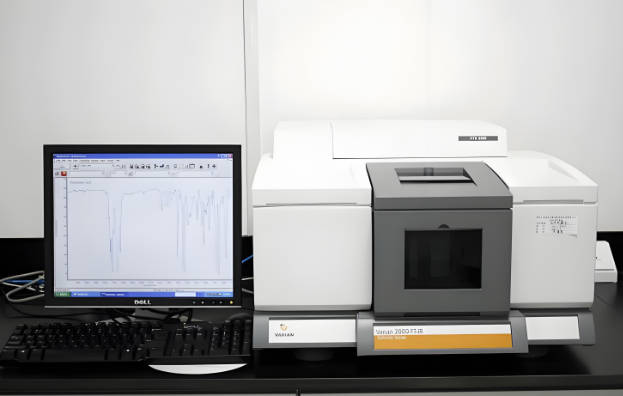
1.1 These test methods are to be used for the recording and interpretation of infrared absorption spectra of electrical insulating oils from 2.5 to 25 181m (4000 to 400 cm-1). 1.2 Two test methods are covered, a Reference Standard Test Method and a Differential Test Method.1.3 These test methods are designed primarily for use as rapid continuity tests for identifying a shipment of oil from a supplier by comparing its spectrogram with that obtained from previous shipments, or with the sample on which approval tests were made. They also may be used for the detection of certain types of contamination in oils, and for the identification of oils in storage or service, by comparison of the spectra of the unknown and known oils. The test methods are not intended for the determination of the various constituents of an oil.1.4 Caution--Infrared absorption is a tool of high resolving power. Conclusions as to continuity of oil quality should not be drawn until sufficient data have been accumulated so that the shipment-to-shipment variation is clearly established, for example.1.5 This standard does not purport to address all of the safety concerns, if any, associated with its use. It is the responsibility of the user of this standard to establish appropriate safety and health practices and determine the applicability of regulatory limitations prior to use.
ASTM D2144-2001用红外线吸收法作电绝缘油检验的标准试验方法
1.1 These test methods are to be used for the recording and interpretation of infrared absorption spectra of electrical insulating oils from 2.5 to 25 181m (4000 to 400 cm-1). 1.2 Two test methods are covered, a Reference Standard Test Method and a Differential Test Method.1.3 These test methods are designed primarily for use as rapid continuity tests for identifying a shipment of oil from a supplier by comparing its spectrogram with that obtained from previous shipments, or with the sample on which approval tests were made. They also may be used for the detection of certain types of contamination in oils, and for the identification of oils in storage or service, by comparison of the spectra of the unknown and known oils. The test methods are not intended for the determination of the various constituents of an oil.1.4 Caution--Infrared absorption is a tool of high resolving power. Conclusions as to continuity of oil quality should not be drawn until sufficient data have been accumulated so that the shipment-to-shipment variation is clearly established, for example.1.5 This standard does not purport to address all of the safety concerns, if any, associated with its use. It is the responsibility of the user of this standard to establish appropriate safety and health practices and determine the applicability of regulatory limitations prior to use.
ASTM D2144-2001e1用红外线吸收法作电绝缘油检验的标准试验方法
1.1 These test methods are to be used for the recording and interpretation of infrared absorption spectra of electrical insulating oils from 2.5 to 25 181m (4000 to 400 cm-1). 1.2 Two test methods are covered, a Reference Standard Test Method and a Differential Test Method.1.3 These test methods are designed primarily for use as rapid continuity tests for identifying a shipment of oil from a supplier by comparing its spectrogram with that obtained from previous shipments, or with the sample on which approval tests were made. They also may be used for the detection of certain types of contamination in oils, and for the identification of oils in storage or service, by comparison of the spectra of the unknown and known oils. The test methods are not intended for the determination of the various constituents of an oil.1.4 Caution--Infrared absorption is a tool of high resolving power. Conclusions as to continuity of oil quality should not be drawn until sufficient data have been accumulated so that the shipment-to-shipment variation is clearly established, for example.1.5 This standard does not purport to address all of the safety concerns, if any, associated with its use. It is the responsibility of the user of this standard to establish appropriate safety and health practices and determine the applicability of regulatory limitations prior to use.
ASTM D2144-2007(2021)用红外吸收法检验电绝缘油的标准实施规程
1.1 These practices are to be used for the recording and interpretation of infrared absorption spectra of electrical insulating oils from 4000 cm−1 to 400 cm−1 (2.5 μm to 25 μm). Note 1: While these practices are specific to ratio recording or optical null double-beam dispersive spectrophotometers, single-beam and HATR (horizontal attenuated total reflectance), Fourier-transform rapid scan infrared spectrophotometers may also be used. By computerized subtraction techniques, ratio methods can be used. Any of these types of equipment may be suitable if they comply with the specifications described in Practice E932. 1.2 Two practices are covered, a Reference Standard Practice and a Differential Practice. 1.3 These practices are designed primarily for use as rapid continuity tests for identifying a shipment of oil from a supplier by comparing its spectrum with that obtained from previous shipments, or with the sample on which approval tests were made. They also may be used for the detection of certain types of contamination in oils, and for the identification of oils in storage or service, by comparison of the spectra of the unknown and known oils. The practices are not intended for the determination of the various constituents of an oil. 1.4 Warning—Infrared absorption is a tool of high resolving power. Conclusions as to continuity of oil quality should not be drawn until sufficient data have been accumulated so that the shipment-to-shipment variation is clearly established, for example. 1.5 The values stated in SI units are to be regarded as standard. No other units of measurement are included in this standard. 1.6 This standard does not purport to address all of the safety concerns, if any, associated with its use. It is the responsibility of the user of this standard to establish appropriate safety, health, and environmental practices and determine the applicability of regulatory limitations prior to use. 1.7 This international standard was developed in accordance with internationa