
医用面罩检测
GB 19083-2010医用防护口罩技术要求
本标准规定了医用防护口罩的技术要求、试验方法、标志与使用说明及包装、运输和贮存。本标准适用于医疗工作环境下,过滤空气中的颗粒物,阻隔飞沫、血液、体液、分泌物等的自吸过滤式医用防护口罩。
YY/T 0691-2008传染性病原体防护装备.医用面罩抗合成血穿透性试验方法(固定体积、水平喷射)
本标准给出了检测医用面罩防合成血喷溅穿透性能的实验室试验方法。本标准主要用于评价制作医用面罩的材料或某些结构的性能。本标准不评价医用面罩的设计、结构、界面或其他能影响医用面罩总体保护能力(如过滤效率和压降)的因素。本试验不评价医用面罩的透气性或其他影响医用面罩呼吸舒适性的性能。本试验评估医用面罩的防护性能。本试验不评估医用面罩对经空气传播,或沉积在医用面罩表面体液形成气溶胶穿透传播的防护能力。
YY/T 1551.1-2017输液、输血器具用空气过滤器 第1部分:气溶胶细菌截留试验方法
YY/T 1551的本部分规定的试验方法适用于对输液、输血器具用空气过滤器成品的细菌截留能力进行评价。输液、输血器具用空气过滤膜材细菌截留能力的评价可参考本部分。本试验宜由经培训的试验人员在生物安全实验室中进行操作。
CNS 14774-2003医用面罩
本标准适用于医疗人员于手术、雷射、隔离、牙科或其它医疗程序时配戴之面罩,主要用途为防止病人与医护人员之间微生物、体液及粒状物质之传递与感染
CNS 14775-2003医用面罩材料细菌过滤效率试验法─使用金黄色葡萄球菌生物气雾
本标准规定量测医用面罩材料细菌过滤效率的试验法,由过滤前之细菌量和过滤后之细菌残存量之比值评估医用面罩材料的细菌过滤效率
CNS 14776-2003医用面罩对合成血液穿透阻力的试验法─以已知速度定量的水平喷洒
本标准规定在短时间内(0到2.5s)以高速度定量之合成血液对医用面罩穿透阻力之试验法。以目视检测合成血液是否穿透判定医用面罩之合格与否
CNS 14777-2003医用面罩空气交换压力之试验法
本标准规定医用面罩之通气性试验法
ISO 22609-2004传染试剂防护服.医疗面罩.防人造血渗透的试验方法(固定容积,水平喷射)
This International Standard describes a laboratory test method for measuring the resistance of medical face masks to penetration by a splash of synthetic blood.nThis International Standard primarily addresses the performance of materials or certain material constructions used in medical face masks. This test method does not address the performance of the medical face mask's design, construction, interfaces or other factors which may affect the overall protection offered by the medical face mask and its operation (such as filtration efficiency and pressure drop).nThis test method does not evaluate the performance of medical face masks as a protection against contamination via airborne exposure pathways or in the prevention of the penetration of aerosolized body fluids deposited on the medical face mask.
ASTM F1862/F1862M-2013医用面罩耐合成血渗透性的标准试验方法 (已知速度下固定量的水平喷射)
5.1x00a0;This test method offers a procedure for evaluating medical face mask resistance to synthetic blood penetration that is useful in establishing claims for penetration resistance performance of medical face masks and ranking their performance. However, this test method does not define acceptable levels of penetration resistance because this determination must be made by each responsible user organization based on its own specific application and conditions. Therefore, when using this test method to make claims for the performance of medical face masks, the specific conditions under which testing is conducted must be described. 5.2x00a0;Medical face masks are intended to resist liquid penetration from the splatter or splashing of blood, body fluids, and other potentially infectious materials. Many factors affect the wetting and penetration characteristics of body fluids, such as surface tension, viscosity, and polarity of the fluid, as well as the structure and relative hydrophilicity or hydrophobicity of the materials and the design of the mask itself. The surface tension range for blood and body fluids (excluding saliva) is approximately 0.042 to 0.060 N/m.7 To help simulate the wetting characteristics of blood and body fluids, the surface tension of the synthetic blood is adjusted to approximate the lower end of this surface tension range. The resulting surface tension of the synthetic blood is 0.042 x00b1; 0.002 N/m. 5.3x00a0;The synthetic blood mixture is prepared with a red dye to aid in visual detection and a thickening agent to simulate the flow characteristics of blood. The synthetic blood will not always duplicate the polarity, and thus the wetting behavior and subsequent penetration, of real blood and other body fluids through protective clothing materials. 5.4x00a0;During a medical procedure, a blood vessel is occasionally punctured resulting in a high velocity stream of blood impacting a protective medical face mask. The impact velocity depends on several factors, the most important being the blood pressure of the patient. Other factors include the size of the puncture, and distance from the puncture. Because the pressure, and thus velocity drops quickly with large punctures, large punctures were not used to model the range of blood splatter velocities considered in this test. Furthermore, this test method is based on the assumption that the medical face mask will be in close proximity (within 300 mm or 12 in.) to the puncture area. The use of this test method is, therefore, based on selecting an appropriate blood pressure, finding the corresponding stream or impact velocity, and determining the valve time to create that stream velocity as shown in Appendix X1. 5.4.1x00a0;The mean human blood pressure generally varies over a range of about 10.7 to 16.0 kPa (80 to 120 mmHg).8 In this test method, medical face masks are tested at stream velocities corresponding to 10.7 kPa, 16.0 kPa, and 21.3 kPa (80 mmHg, 120 mm Hg, and 160 mm Hg). 5.5x00a0;This test method permits the use of other non-standard test pressures, stream velocities, fluid volumes, and specimen orientations for evaluating medical face mask penetration resistance consistent with specific applications. 5.6x00a0;This test method differs from Test Method F1670 by dispensing a stream of 2 mL of synthetic blood against the target area of a complete medical mask specimen whereas Test Method F
ASTM F2100-2001医用面罩材料的性能标准规范
1.1 This specification covers testing and requirements for materials used in the construction of medical face masks that are used in providing health care services such as surgery and patient care.1.2 This specification provides for the classification of medical face mask material performance. Medical face mask material performance is based on testing for bacterial filtration efficiency, differential pressure, sub-micron particulate filtration efficiency, resistance to penetration by synthetic blood, and flammability.1.3 This specification does not address all aspects of medical face mask design and performance. This specification does not specifically evaluate the effectiveness of medical face mask designs as related to the barrier and breathability properties. This specification does not also apply to respiratory protection, which may be necessary for some health care services.1.4 The values stated in SI units or in other units shall be regarded separately as standard. The values stated in each system must be used independently of the other, without combining values in any way.1.5 The following precautionary caveat pertains only to the test methods portion, Section 9 , of this specification: This standard does not purport to address all of the safety concerns, if any, associated with its use. It is the responsibility of the user of this standard to establish appropriate safety and health practices and determine the applicability of regulatory limitations prior to use.
ASTM F2100-2004医用面罩用材料性能的标准规范
1.1 This specification covers testing and requirements for materials used in the construction of medical face masks that are used in providing health care services such as surgery and patient care.1.2 This specification provides for the classification of medical face mask material performance. Medical face mask material performance is based on testing for bacterial filtration efficiency, differential pressure, sub-micron particulate filtration efficiency, resistance to penetration by synthetic blood, and flammability.1.3 This specification does not address all aspects of medical face mask design and performance. This specification does not specifically evaluate the effectiveness of medical face mask designs as related to the barrier and breathability properties. This specification does not also apply to respiratory protection, which may be necessary for some health care services.1.4 The values stated in SI units or in other units shall be regarded separately as standard. The values stated in each system must be used independently of the other, without combining values in any way.1.5 The following precautionary caveat pertains only to the test methods portion, Section 9, of this specification: This standard does not purport to address all of the safety concerns, if any, associated with its use. It is the responsibility of the user of this standard to establish appropriate safety and health practices and determine the applicability of regulatory limitations prior to use.
ASTM F2100-2007医用面罩用材料性能的标准规范
1.1 This specification covers testing and requirements for materials used in the construction of medical face masks that are used in providing health care services such as surgery and patient care.1.2 This specification provides for the classification of medical face mask material performance. Medical face mask material performance is based on testing for bacterial filtration efficiency, differential pressure, sub-micron particulate filtration efficiency, resistance to penetration by synthetic blood, and flammability.1.3 This specification does not address all aspects of medical face mask design and performance. This specification does not specifically evaluate the effectiveness of medical face mask designs as related to the barrier and breathability properties. This specification does not also apply to respiratory protection, which may be necessary for some health care services.1.4 The values stated in SI units or in other units shall be regarded separately as standard. The values stated in each system must be used independently of the other, without combining values in any way.The following precautionary caveat pertains only to the test methods portion, Section 9, of this specification: This standard does not purport to address all of the safety concerns, if any, associated with its use. It is the responsibility of the user of this standard to establish appropriate safety and health practices and determine the applicability of regulatory limitations prior to use.
ASTM F2100-2011(2018)医用面罩用材料性能的标准规格
1.1x00a0;This specification covers testing and requirements for materials used in the construction of medical face masks that are used in providing healthcare services such as surgery and patient care. 1.2x00a0;This specification provides for the classification of medical face mask material performance. Medical face mask material performance is based on testing for bacterial filtration efficiency, differential pressure, sub-micron particulate filtration efficiency, resistance to penetration by synthetic blood, and flammability. 1.3x00a0;This specification does not address all aspects of medical face mask design and performance. This specification does not specifically evaluate the effectiveness of medical face mask designs as related to the barrier and breathability properties. This specification does not also apply to respiratory protection, which may be necessary for some healthcare services. 1.4x00a0;The values stated in SI units are to be regarded as standard. No other units of measurement are included in this standard. 1.5x00a0;The following precautionary caveat pertains only to the test methods portion, Section 9, of this specification: This standard does not purport to address all of the safety concerns, if any, associated with its use. It is the responsibility of the user of this standard to establish appropriate safety, health, and environmental practices and determine the applicability of regulatory limitations prior to use. 1.6x00a0;This international standard was developed in accordance with internationally recognized principles on standardization established in the Decision on Principles for the Development of International Standards, Guides and Recommendations issued by the World Trade Organization Technical Barriers to Trade (TBT) Committee.
ASTM F2100-2023医用面罩用材料性能的标准规范
1.1?This specification covers testing and requirements for materials used in the construction of medical face masks that are used in providing healthcare services such as surgery and patient care. 1.1.1?This specification addresses medical masks with ties (surgical masks) and ear loops (procedure masks or isolation masks). 1.2?This specification provides for the classification of medical face mask material performance. Medical face mask material performance is based on testing for bacterial filtration efficiency, differential pressure, sub-micron particulate filtration efficiency, resistance to penetration by synthetic blood, and flammability. 1.3?This specification does not address all aspects of medical face mask design and performance. This specification does not specifically evaluate the effectiveness of medical face mask designs as related to their overall barrier and breathability properties. 1.3.1?This specification does not include any specific design criteria for medical face masks; however, surgical masks are differentiated by having ties to allow adjustment of the medical face mask fit in comparison to procedure or isolation masks, which use ear loops to affix the mask to the wearer’s face. 1.4?This specification does not address requirements for regulated respiratory protection devices such as respirators, which may be necessary for some healthcare services and exposure to inhalation hazards. Note 1:?Performance requirements for NIOSH-approved N95 respirators are described in 42 CFR Part 84. Additional requirements for NIOSH-approved N95 respirators intended for use in healthcare settings are described in the Memorandum of Understanding between FDA and NIOSH. FDA/NIOSH MOU 225-18-006, November 2017 and the NIOSH Conformity Assessment Letter to Manufacturers, NIOSH CA 2018-1010, November 2018. 1.5?The values stated in SI units are to be regarded as standard. No other units of measurement are included in this standard. 1.6?The following precautionar
ASTM F2101-2001用金黄色葡萄球菌的生物气溶胶评定医用面罩材料细菌过滤效果(BFE)的标准试验方法
1.1 This test method is used to measure the bacterial filtration efficiency (BFE) of medical face mask materials, employing a ratio of the upstream bacterial challenge to downstream residual concentration to determine filtration efficiency of medical face mask materials.1.2 This test method is a quantitative method that allows filtration efficiency for medical face mask materials to be determined. The maximum filtration efficiency that can be determined by this method is 99.9 %. 1.3 This test method does not apply to all forms or conditions of biological aerosol exposure. Users of the test method should review modes for worker exposure and assess the appropriateness of the method for their specific applications.1.4 This test method evaluates medical face mask materials as an item of protective clothing but does not evaluate materials for regulatory approval as respirators. If respiratory protection for the wearer is needed, a NIOSH-certified respirator should be used. Relatively high bacterial filtration efficiency measurements for a particular medical face mask material does not ensure that the wearer will be protected from biological aerosols since this test method primarily evaluates the performance of the composite materials used in the construction of the medical face mask and not its design, fit or facial sealing properties.1.5 Units--The values stated in SI units or inch-pound units are to be regarded separately as standard. The values stated in each system may not be exact equivalents; therefore, each system shall be used independently of the other. Combining values from the two systems may result in nonconformance of the standard.1.6 This test method does not address breathability of the medical face mask materials or any other properties affecting the ease of breathing through the medical face mask material.1.7 This standard does not purport to address all of the safety concerns, if any, associated with its use. It is the responsibility of the user of this standard to establish appropriate safety and health practices and determine the applicability of regulatory limitations prior to use.
ASTM F2101-2007使用金黄葡萄球菌生物悬浮粒评估医用面罩材料的细菌过滤效率(BFE)用标准试验方法
1.1 This test method is used to measure the bacterial filtration efficiency (BFE) of medical face mask materials, employing a ratio of the upstream bacterial challenge to downstream residual concentration to determine filtration efficiency of medical face mask materials.1.2 This test method is a quantitative method that allows filtration efficiency for medical face mask materials to be determined. The maximum filtration efficiency that can be determined by this method is 99.9 %. 1.3 This test method does not apply to all forms or conditions of biological aerosol exposure. Users of the test method should review modes for worker exposure and assess the appropriateness of the method for their specific applications.1.4 This test method evaluates medical face mask materials as an item of protective clothing but does not evaluate materials for regulatory approval as respirators. If respiratory protection for the wearer is needed, a NIOSH-certified respirator should be used. Relatively high bacterial filtration efficiency measurements for a particular medical face mask material does not ensure that the wearer will be protected from biological aerosols since this test method primarily evaluates the performance of the composite materials used in the construction of the medical face mask and not its design, fit or facial sealing properties.1.5 Units The values stated in SI units or inch-pound units are to be regarded separately as standard. The values stated in each system may not be exact equivalents; therefore, each system shall be used independently of the other. Combining values from the two systems may result in nonconformance of the standard.1.6 This test method does not address breathability of the medical face mask materials or any other properties affecting the ease of breathing through the medical face mask material.This standard does not purport to address all of the safety concerns, if any, associated with its use. It is the responsibility of the user of this standard to establish appropriate safety and health practices and determine the applicability of regulatory limitations prior to use.
ASTM F2101-2014用金黄色葡萄球菌的生物气溶胶评定医用面罩材料细菌过滤效果(BFE)的标准试验方法
5.1x00a0;This test method offers a procedure for evaluation of medical face mask materials for bacterial filtration efficiency. This test method does not define acceptable levels of bacterial filtration efficiency. Therefore, when using this test method it is necessary to describe the specific condition under which testing is conducted. 5.2x00a0;This test method has been specifically designed for measuring bacterial filtration efficiency of medical face masks, using Staphylococcus aureus as the challenge organism. The use of S. aureus is based on its clinical relevance as a leading cause of nosocomial infections. 5.3x00a0;This test method has been designed to introduce a bacterial aerosol challenge to the test specimens at a flow rate of 28.3 L/mm. (1 ft3/min). This flow rate is within the range of normal respiration and within the limitations of the cascade impactor. 5.4x00a0;Unless otherwise specified, the testing shall be performed with the inside of the medical face mask in contact with the bacterial challenge. Testing may be performed with the aerosol challenge directed through either the face side or liner side of the test specimen, thereby, allowing evaluation of filtration efficiencies which relate to both patient-generated aerosols and wearer-generated aerosols. 5.5x00a0;Degradation by physical, chemical, and thermal stresses could negatively impact the performance of the medical face mask material. The integrity of the material can also be compromised during use by such effects as flexing and abrasion, or by wetting with contaminants such as alcohol and perspiration. Testing without these stresses could lead to a false sense of security. If these conditions are of concern, evaluate the performance of the medical face mask material for bacterial filtration efficiency following an appropriate pretreatment technique representative of the expected conditions of use. Consider preconditioning to assess the impact of storage conditions and shelf life for disposable products, and the effects of laundering and sterilization for reusable products. 5.6x00a0;If this procedure is used for quality control, perform proper statistical design and analysis of larger data sets. This type of analysis includes, but is not limited to, the number of individual specimens tested, the average percent bacterial filtration efficiency, and standard deviation. Data reported in this way help to establish confidence limits concerning product performance. Examples of acceptable sampling plans are found in references such as ANSI/ASQC Z1.4 and ISO 2859-1. 1.1x00a0;This test method is used to measure the bacterial filtration efficiency (BFE) of medical face mask materials, employing a ratio of the upstream bacterial challenge to downstream residual concentration to determine filtration efficiency of medical face mask materials. 1.2x00a0;This test method is a quantitative method that allows filtration efficiency for medical face mask materials to be determined. The maximum filtration efficiency that can be determined......
NF S97-166-2019医用面罩. 要求和试验方法
Domaine d'applicationLe présent document spécifie les exigences de fabrication, de conception et de performance, ainsi que les méthodes d'essai relatives aux masques à usage médical destinés à limiter la transmission d'agents infectieux des membres de l'équipe médicale aux patients lors d'actes chirurgicaux et d'autres actes médicaux aux exigences similaires. Un masque à usage médical présentant une barrière antimicrobienne appropriée peut également s'avérer efficace pour diminuer l'émission d'agents infectieux venant du nez et de la bouche d'un patient présentant des symptômes cliniques ou asymptomatique.La présente Norme européenne ne s'applique pas aux masques exclusivement destinés à la protection individuelle des membres de l'équipe.Il existe des normes relatives aux masques destinés à la protection individuelle des voies respiratoires.L'Annexe A apporte des informations aux utilisateurs des masques à usage médical.
相关阅读
了解更多检测知识
轨道交通车辆用防结冰涂料耐人工气候老化试验检测
轨道交通车辆用防结冰涂料耐人工气候老化试验检测,通过氙灯或UV人工气候老化箱模拟日光辐照、温度与凝露耦合作用,评价涂层失光、变色、粉化、附着力变化及接触角、着冰力等功能保持率。本文依样品制备、试验方法、评价指标至判定标准逐步说明,适用于高寒运营车辆涂料验收与配方验证。
钢质防护门精度试验检测
钢质防护门精度试验检测围绕门框与门扇的尺寸偏差、对角线差、表面平整度、垂直度及配合间隙等指标展开。检测采用钢卷尺、游标卡尺、塞尺、靠尺与线坠等通用量具,按统一布点规则测量并与设计公差比对,逐项判定合格性,其结果直接反映加工与安装质量,是产品出厂检验与工程验收的核心依据。
剃须膏、剃须凝胶香气检测
剃须膏、剃须凝胶香气检测以GC-MS定性定量香精成分,以HPLC分析热敏与弱挥发性香料组分,辅以顶空进样与嗅闻联用技术表征香气释放特征,并结合方法学验证与留香、稳定性评价,评判香气一致性、禁限用组分合规性与产品货架期表现。
高分子材料台面板耐污染检测
高分子材料台面板耐污染检测采用污染试剂接触试验法,覆盖染色型、油脂型、溶剂型及腐蚀型污染物。试样经清洁预处理后滴加试剂并静置规定时间,经水、洗涤剂及溶剂三级清洁,以目视评级结合光泽度、色差仪器测量量化残留程度,适用于实验室及厨房台面的出厂检验与选材比对。
皮革和合成革邻苯基苯酚检测
皮革和合成革邻苯二甲酸酯之外的防霉残留物邻苯基苯酚检测,可采用GC-MS与HPLC两条技术路线。样品经有机溶剂提取、净化后进样分析,以特征离子与保留时间定性,标准曲线定量。方法定量限须低于生态管控限量,结果用于成品合规判定与出口贸易验收。
LED产品颜色测量设备检测
LED产品颜色测量设备检测以色度学原理与量值溯源为基础,核查分光光度计、积分球测色系统等设备的光谱响应、色品坐标及相关色温测定能力。检测覆盖样品制备、波长标定、光度线性、重复性与准确度验证等环节,判定结果用于支持LED器件与灯具的颜色分bin、出厂检验及工程验收。
我们的优势
选择中析研究所的八大理由
资质齐全
旗下实验室依法依规开展检测,报告科学公正,获监管与客户广泛认可。
设备先进
上千台精密仪器定期检定校准,量值溯源体系完善。
专家团队
多领域技术专家,十年以上经验,破解各类疑难检测。
标准覆盖广
覆盖GB、行标及ISO、ASTM等国际标准,可定制方案。
周期短
常规项目7-10个工作日出报告,流程标准高效。
加急服务
支持加急检测通道,助力客户快速完成质量把关。
一对一服务
工程师全程对接,需求沟通到报告解读全流程陪伴。
数据保密
严格保密制度,客户样品与检测数据安全无忧。
荣誉资质
旗下实验室权威认证 · 公信检测 · 点击查看原图
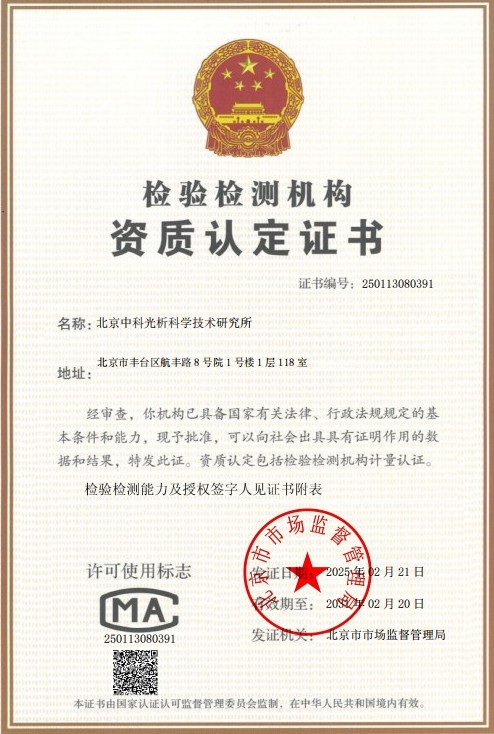
CMA检验检测机构资质认定证书
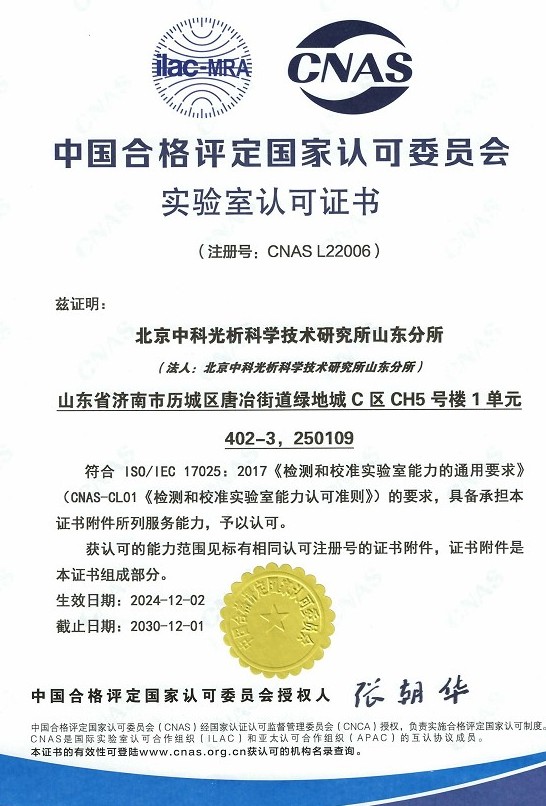
CNAS实验室认可证书
ISO管理体系认证证书
高新技术企业证书
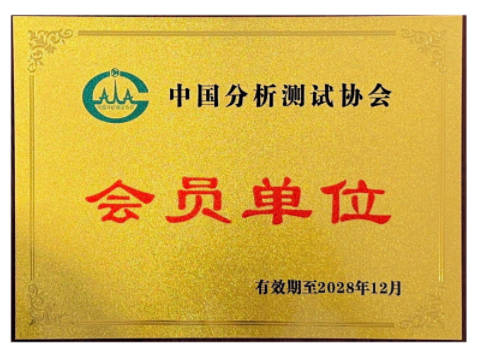
中国分析测试协会会员单位
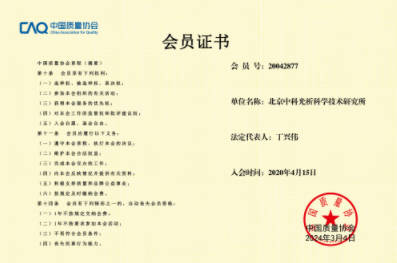
中国质量协会会员证书

AAA级信用企业
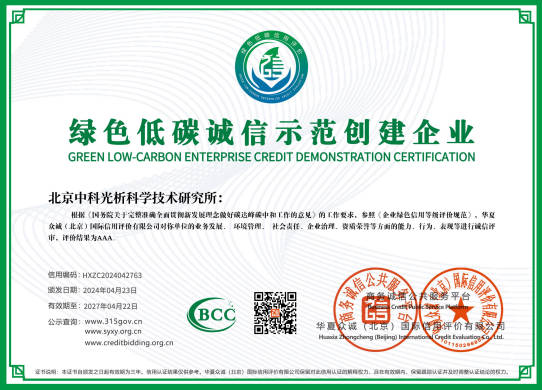
绿色低碳诚信示范创建企业
仪器设备
1000余台精密设备 · 点击查看原图
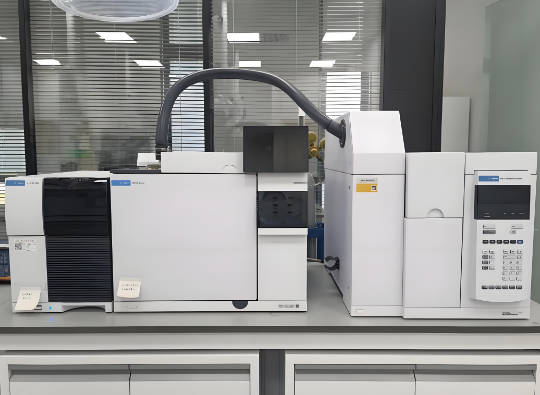
气相色谱-质谱联用仪 GC-MS
复杂有机组分的定性鉴定与未知物剖析利器。
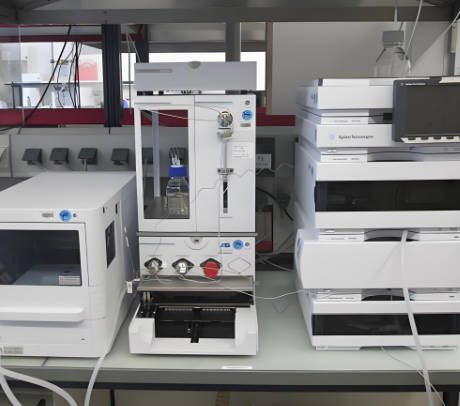
高效液相色谱仪 HPLC
食品添加剂、药品成分等热敏物质的精准检测。
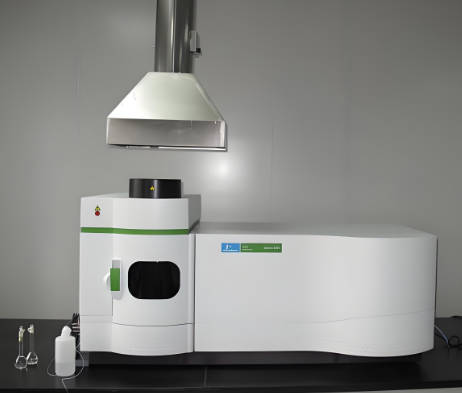
电感耦合等离子体发射光谱仪 ICP-OES
一次进样同时读出数十种金属元素含量。
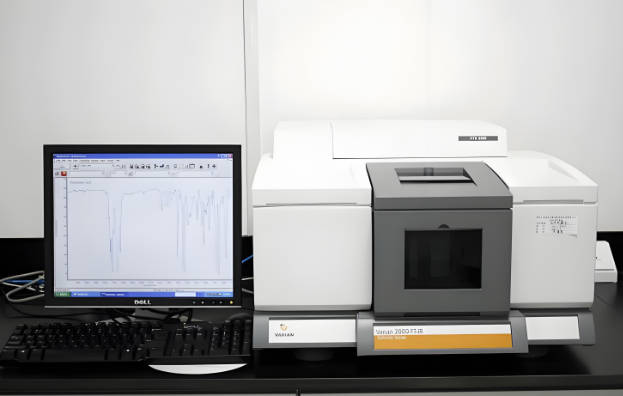
傅里叶变换红外光谱仪 FTIR
通过特征吸收峰快速判断材料种类与分子结构。
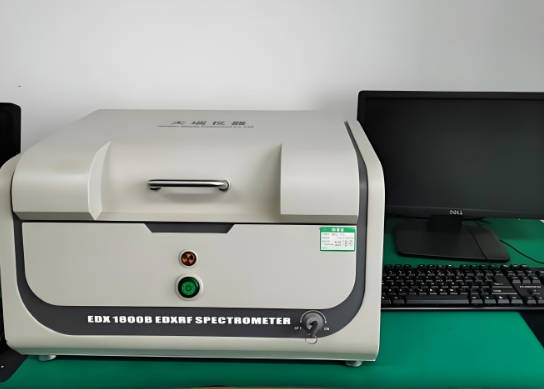
X射线荧光光谱仪 XRF
几分钟完成元素快检,且不损伤样品。
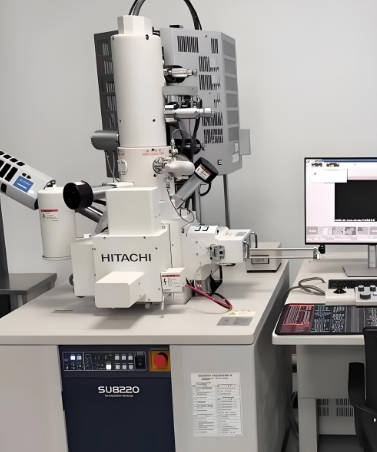
扫描电子显微镜 SEM
放大数十万倍观察表面微观结构,锁定失效根源。
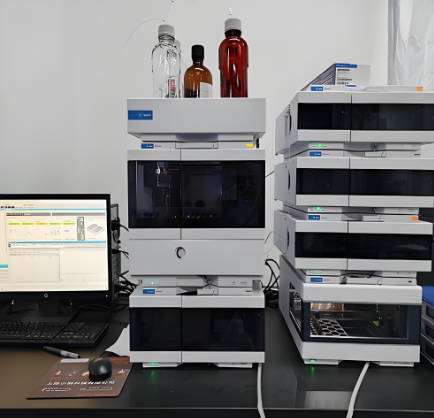
液相色谱-质谱联用仪 LC-MS
农兽药残留等痕量物质的高灵敏确证检测。
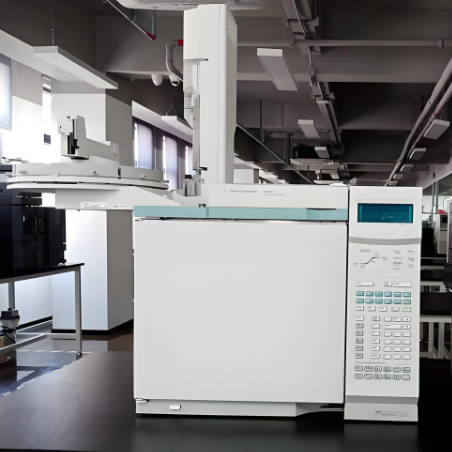
气相色谱仪 GC
溶剂残留、香气成分等挥发性物质的专业检测。
在线工程师 一对一服务
检测需求不知从何入手?立即联系在线工程师,一对一解答检测疑问,免费获取检测方案与报价。
 NEW · 全新上线
VR实验室上线啦!
720°全景实景观览 · 足不出户走进实验室
立即体验
n
NEW · 全新上线
VR实验室上线啦!
720°全景实景观览 · 足不出户走进实验室
立即体验
n