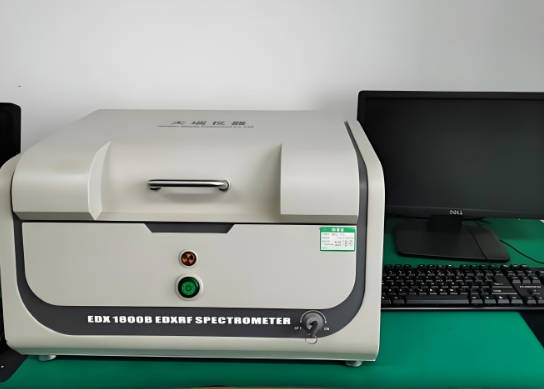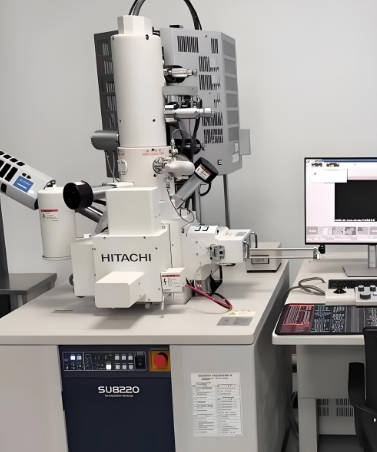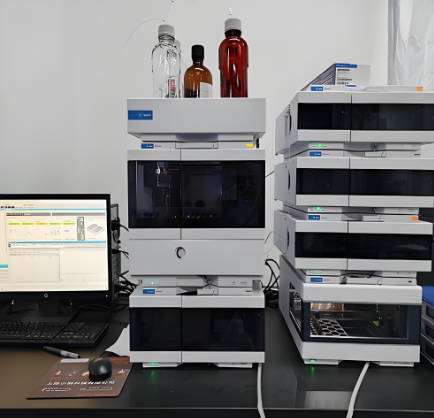
热镀锌电镀锌等钢产品检测
GB/T 1839-2008钢产品镀锌层质量试验方法
本标准规定了钢产品单位面积上镀锌层质量试验方法的原理、试验溶液、试样、试验步骤、结果计算、再现性及试验报告。本标准所述镀锌层包括纯镀锌层、锌铁合金和锌铝合金镀层(例如:锌-5%铝合金镀层、55%铝-锌合金镀层)。本标准适用于面积易于测定的热镀锌和电镀锌等钢产品。镀锌钢板也可采用附录A的方法进行锌层质量试验。
GB/T 12754-2019彩色涂层钢板及钢带
本标准规定了彩色涂层钢板及钢带的术语和定义,牌号表示方法、分类及代号,订货内容,尺寸、外形、重量,技术要求,试验方法,检验规则,包装、标志及质量证明书。本标准适用于建筑内、外用途的彩色涂层钢板及钢带(以下简称为彩涂板)。家电及其他用途的彩涂板可参考使用。
GB/T 12755-2008建筑用压型钢板
本标准规定了各类建筑用压型钢板的分类、代号、板型和构造要求、截面形状尺寸、技术要求、质量检验和允许偏差、包装、标志、质量证明书等。本标准适用于在连续式机组上经辊压冷弯成型建筑用压型钢板,包括胜于屋面、墙面与楼盖等部位的各类型板。
GB/T 15574-2016钢产品分类
本标准规定了按照生产工序、外形、尺寸和表面状态对钢产品进行分类的基本准则。本标准适用于按照生产工序、外形、尺寸和表面状态对钢产品进行分类。
GB/T 19355.1-2016锌覆盖层 钢铁结构防腐蚀的指南和建议 第1部分:设计与防腐蚀的基本原则
GB/T 19355的本部分对暴露在不同使用环境下的结构件所使用的防腐蚀锌覆盖层及耐腐蚀等级提出了设计指南和建议。初始保护涉及到:——可行的标准工艺;——设计要求;——使用环境。本部分适用于采用以下工艺获得的锌覆盖层:a) 热浸镀锌层(热浸镀锌制件);b) 热浸镀锌层(连续热浸镀锌钢板);c) 粉末渗锌层;d) 热喷涂层;e) 机械镀层;f) 电镀锌层。这些指南和建议不涉及镀锌钢服役中的防腐蚀维修。这个问题的指南,可以参见ISO 12944-5和ISO 12944-8。
GB/T 34020.2-2017双层卷焊钢管 第2部分:汽车管路系统用管
GB/T 34020的本部分规定了汽车管路系统用双层卷焊钢管的分类与标记、尺寸、外形、重量及允许偏差、技术要求、试验方法、检验规则、包装、标志和质量证明书。本部分适用于汽车的制动、离合、动力转向、燃油进回油、发动机、通风冷却等管路系统用双层卷焊钢管,也适用于机械液压管路系统和通用工程设备中用的双层卷焊钢管(以下简称“双层管”)。
GB/T 36483-2018悬索桥用主缆平行钢丝索股
本标准规定了悬索桥主缆平行钢丝索股的分类、结构、规格和型号、技术要求、试验方法、检验规则,以及标志、包装、运输和储存要求。本标准适用于悬索桥用主缆平行钢丝索股的生产、检验和使用。
GB/T 36709-2018减振复合钢板
本标准规定了减振复合钢板的术语和定义、分类和代号、订货内容、尺寸、重量及允许偏差、技术要求、试验方法、检验规则、包装、标志及质量证明书。本标准适用于汽车、家电、建筑、机械等领域用厚度为0.60 mm~3.00 mm具有减振作用的钢板(以下简称“减振板”)。以钢卷供货的减振复合钢带亦可参考本标准执行。
GB 50629-2010板带轧钢工艺设计规范
本规范适用于新建、改建和扩建板带轧钢车间的工艺设计。改建和扩建时,应从实际出发,充分利用已有资源。
GB 50632-2010钢铁企业节能设计规范
本规范适用于钢铁企业的总体发展规划、钢铁企业的所有新建和改造项目的节能设计,以及钢铁企业能源规划等。
YB/T 4458-2015家电用彩色涂层钢板及钢带
本标准规定了家电用彩色涂层钢板及钢带的术语和定义、分类和代号、订货内容、尺寸、外形、重量及允许偏差、技术要求、检验和试验、包装、标志及质量证明书等。本标准适用于家电行业使用的公称厚度为0.2mm~2.0mm彩色涂层钢板及钢带(以下简称为“家电用彩涂板”)。经双方协商,其他相近用途的彩涂板可参照使用。
ASTM A978/A978M-2008重力流动卫生用排污管道,暴雨排污管道用和其他专用的预涂层的和聚乙烯衬料带由复合材料加强肋的钢管规范
1.1 This specification covers composite ribbed steel pipe, precoated and polyethylene lined intended for use for gravity flow sanitary sewers, storm sewers, and other special applications such as water transmission pipe, rehabilitation pipe, slip line pipe, and irrigation pipe where extra corrosion and abrasion resistance are required. The steel sheet used in the fabrication of the pipe has a polymer coating over a metallic coating of zinc on both sides. In addition, as the pipe is being fabricated, the ribs are filled with polyethylene and then a polyethylene liner is extruded onto the interior surface. 1.2 The exterior polymer precoating provides extra protection of the steel against soilside corrosion, in addition to that provided by the metallic coating, and also provides a dielectric barrier for cathodic protection. The interior polymer precoating provides an adhesive layer between the galvanized steel and the polyethylene lining. The applied lining provides internal protection against corrosion, erosion, and abrasion. By filling the rib which has a deltoid shape (smaller at the opening in the pipe wall than at the bottom of the rib), the polyethylene is mechanically connected to the pipe wall and the polyethylene liner is then thermally bonded to the filled rib. 1.3 This specification does not include requirements for bedding, backfill, or the relationship between earth cover load and sheet thickness of the pipe. Experience has shown that the successful performance of this product depends upon the proper selection of sheet thickness, type of bedding and backfill, controlled manufacture in the plant, and care in the installation. The installation procedure is described in Practice A 798. 1.4 This specification is applicable to orders in either inch-pound units as A 978, or in SI units as A 978M. Inch-pound units and SI units are not necessarily equivalent. SI units are shown in brackets in the text for clarity, but they are the applicable values when the material is ordered to A 978M. 1.5 This standard does not purport to address all of the safety concerns, if any, associated with its use. It is the responsibility of the user of this standard to establish appropriate safety and health practices and determine the applicability of regulatory limitations prior to use.
EN 14490-2010专门技术工程的实施.土钉
This European Standard establishes general principles for the execution, testing, supervision and monitoring of soil nailing. Soil nailing is a construction technique, used to enhance/maintain the stability of a soil mass by installation of reinforcing elements (soil nails). Typical examples of soil nailing are given in Annex A. The scope of soil nailing applications considered inThis European Standard includes the installation and testing of soil nails and associated operations, required when stabilising existing and newly cut slopes and faces in soil, existing earth retaining structures, embankments, existing tunnels and the excavated facing of new tunnels in soil. Soil nailing may be used to form part of a hybrid construction.This European Standard is relevant only to the soil nailing aspect of such constructions. Techniques, such as reinforcement of ground by vertical inclusions (sheet piles, bored or driven piles, or other elements) and stabilisation with rock bolts, prestressed ground anchors or tensions piles are not covered byThis European Standard. Guidance on practical aspects of soil nailing and aspects on design, durability and testing is given in informative Annexes A, B and C, respectively.
NF P84-206-1-2-2008建筑工程.带防水涂层的有槽金属板屋顶.第1-2部分:材料选择用一般标准
Le présent document a pour objet de fixer les critères généraux de choix des matériaux utilisés pour l'exécution des ouvrages de toitures comportant des éléments porteurs en tôle d'acier nervurée recevant un revêtement d'étanchéité dans le champ d'application de la norme NF DTU 43.3 P1-1.
DIN EN 10162-2003冷轧钢型材.交货技术条件.尺寸和横截面公差
The document specifies for cold rolled steel sections the dimensional and cross-sectional tolerances.
DIN EN ISO 16432-2007电阻焊接.用凸焊工艺的涂覆和非涂覆低碳钢的凸焊程序
This International Standard specifies requirements for embossed-resistance-projection welding in thefabrication of assemblies of uncoated and metallic coated Iow carbon steel comprising two thicknesses ofmetal, where the maximum single sheet thickness of components to be welded is within the range 0,4 mm to3, mm for the following materials:-- uncoated steels;-- hot-dip zinc or iron-zinc alloy (galvannealed) coated steel;-- electrolytic zinc, zinc-iron, or zinc-nickel coated steel;-- aluminium coated steel;-- zinc-aluminium coated steel.Organic-coated or primer-coated steels are not covered by this International Standard. Guidelines forappropriate welding equipment and projection welding conditions for various coated steels are given inAnnexes A to C. These are for guidance only and may need to be adapted to suit the specified serviceconditions of the fabrication, prevailing production conditions, type of welding equipment, mechanical andelectrical characteristics of the welding machine, electrode configuration, and material. These requirementsshall be taken from the relevant welding procedure specification for the application or procedure, where theseexist.
DIN EN ISO 16433-2007电阻焊接.涂覆和非涂覆低碳钢的缝焊用程序
1 ScopeThis International Standard specifies requirements for resistance seam welding in the fabrication ofassemblies of uncoated and metallic coated Iow carbon steel comprising two sheets of metal, where themaximum single sheet thickness of components to be welded is within the range 0,4 mm to 3 mm for thefollowing materials:_ uncoated steels;-- hot-dip zinc or iron-zinc alloy (galvannealed) coated steel; _ electrolytic zinc, zinc-iron, or zinc-nickel coated steel; _ aluminium coated steel; _ zinc-aluminium coated steel. Organic-coated or primer-coated steels are not covered by this International Standard. Guidelines for the design of appropriate seam welding equipment and welding conditions are given in Annexes A and B. These are for guidance only and may need to be adapted to suit the specified service conditions of the fabrication, ~- prevailing production conditions, type of welding equipment, mechanical and electrical characteristics of the welding machine, electrode configuration, and material. These requirements shall be taken from the relevant welding procedure specification for the application or procedure, where these exist.
BS 6510-2010钢窗和玻璃门.规格
This British Standard specifies requirements for the design andfabrication of steel‑framed windows and glazed doors.NOTE Performance requirements common to all windows and externalpedestrian doors are specified in BS 6375.It is applicable to windows and doors fabricated into frames in afactory from mild steel profiles, hot‑rolled or cold‑formed, installedvertically into the external face of buildings, as single or multi‑lightunits, in coupled assemblies when appropriate, of the following types:a) fixed light;b) side‑hung open out or in;c) top‑hung;d) bottom‑hung;e) horizontal pivot;f) vertical pivot;g) single‑leaf hinged or pivoting door;h) double‑leaf hinged or pivoting door.It is not applicable to:1) windows or doors in which any frame member is longer than 3 m;2) patent glazing or curtain walls that span across structural floorelements;3) kits despatched in bar form for assembly into frames on site.
BS EN 14490-2010特殊岩土工程的实施.土钉
1.1 This European Standard establishes general principles for the execution, testing, supervision andmonitoring of soil nailing.1.2 Soil nailing is a construction technique, used to enhance/maintain the stability of a soil mass byinstallation of reinforcing elements (soil nails). Typical examples of soil nailing are given in Annex A.1.3 The scope of soil nailing applications considered in this European Standard includes the installation andtesting of soil nails and associated operations, required when stabilising existing and newly cut slopes andfaces in soil, existing earth retaining structures, embankments, existing tunnels and the excavated facing ofnew tunnels in soil.1.4 Soil nailing may be used to form part of a hybrid construction. This European Standard is relevant onlyto the soil nailing aspect of such constructions.1.5 Techniques, such as reinforcement of ground by vertical inclusions (sheet piles, bored or driven piles,or other elements) and stabilisation with rock bolts, prestressed ground anchors or tensions piles are notcovered by this European Standard.1.6 Guidance on practical aspects of soil nailing and aspects on design, durability and testing is given ininformative Annexes A, B and C, respectively.